
Interesting concept never fully realised. It also felt in conflict on one hand it wanted to highlight societies need to assign value to women placed on their beauty but on the other hand its central character was presented as to only caring about her value – as beauty.
DISCLAIMER CONTAINS SPOILERS – Third feature film from Gia Coppola, Written by Kate Gersten Synopsis – A seasoned showgirl must plan for her future when her show abruptly closes after a 30-year run.

The film landed it’s point when the director auditioning Pam tells her she was probably only employed because at the time she was young and beautiful and that she can’t really dance and she isn’t selling that any more. That hits and it hurts and it’s meant to be embarrassing because she is pushing him for an answer.
I wanted Shelly to be the victor but I guess I wanted her to want to quest for more than to be seen as beautiful. The star of the film for me was Jamie Lee Curtis’ character, the always assertive, gambling, drinking former showgirl, come cocktail waitress Annette. She was the most fully formed character to me. The Locker room costume change felt confident and unconcerned for validation, relaxed and assured. The sequence when she takes to the stage and dances felt the most captivating and was my favourite of the film, it felt sad and lonely, no partner or audience to observe but the lack of voyeurism meant she was dancing for herself and a large part of this film felt like characters looking for validation from others, outside themselves. Annette dancing was fierce, it empowered her.
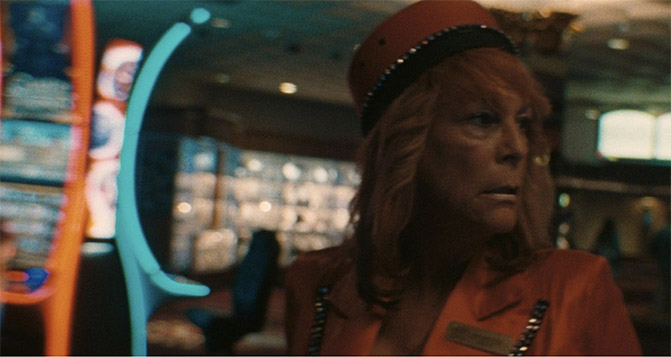
I’m older than I expected to be, having such a major life change and starting all over again, so watching this film at this moment in my life felt relatable. I felt the film’s moments of overwhelmed people and parts made me tear up, it is a sad film. The characters are all a little sad and it doesn’t offer any hope for the future, just one last final performance. You could say her daughter and Eddie sitting side by side smiling and appreciating Shelly could hint at a more connected future but that feels like a reach.
I think mostly I didn’t find Shelly a likable character, I felt sorry for her, my heart went out to her, I wanted to see her win but I just didn’t connect with her as she seemed vapid. I was wondering if the pitch of Pamela Anderson’s voice altered my view of her as it’s a provocative pitch but then I remembered watching the Pamela Anderson Docu-series on Netflix and found her really engaging and charming and endearing, none of these things I found Shelly. She seemed juvenile, self involved and a little clueless. I think Pamela did a great job but I just don’t think she had a lot to work with considering the dialogue. I watched her for nearly two hours but other than; she bought fish for a man who likes her but cancelled a date, she had a daughter with Eddie 22 years ago and was a showGirl, else I got nada. She loves the bygone era and the prestige of showgirls but I’m not even sure that needs to be said out loud, that seems obvious to me being the oldest Showgirl there. I appreciated when she stated she didn’t want to keep apologising so could Hannah her daughter just forgive her, that is a fair stance but it is also dismissive. She wanted to be a mother but on her terms and when the youngest showgirl was upset and looking for support she offered none, closing the door in her face. Jodie had at the start of the film, before the parental bond of Eddie and Shelly had been made a apparently, implied she viewed them like a mum and dad. Unbeknownst to the audience and her character that they do indeed already have a daughter. With the door slamming, I liked the realness of the moment and the selfishness of the act but it didn’t make me like Shelly more. Her character has every opportunity to find value in other elements of life but being a showgirl truly defined Shelly, like this was all she was born to be. You can read depth and complexity into Shelly if you stop to consider Pamela Andersons fame and public persona, as an interesting parallel but that depth and complexity isn’t embodied in Shelly. It’s an interesting juxtaposition, Andersons own objectification and high value status as a beautiful young woman, CJ was a phenomenal Baywatch Lifeguard but everyone just remembers the titillating slow motion beach runs.
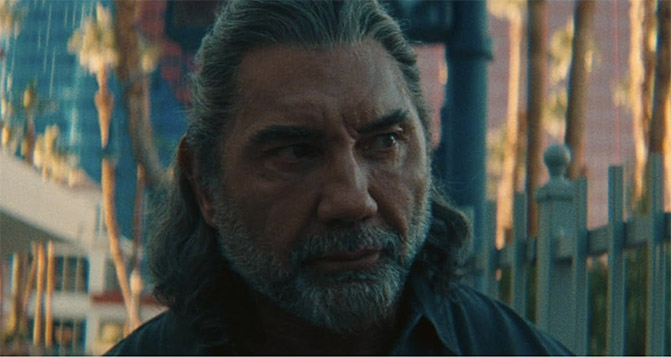
I’ve seen people say she is mourning the loss of her dreams and artist exploration but the fact she simply isn’t very good seems to compromise that notion. Or that this film isn’t about simply losing male admiration and perhaps the film isn’t but Shelly’s character really doesn’t offer much in the way of discarding that concern. Shelly asserts in protest “Feeling seen, feeling beautiful, that is powerful. And I can’t imagine my life without it.” I never want to take anyone’s power away but it concerns me that feeling beautiful shouldn’t be the only place anyone finds their worth regardless of whether they are male or female.
The cinematography I didn’t enjoy, I would have begrudgingly accepted the tight framing and chaotic whip pans to follow the action if they had been for a purpose, to entrap as in the frenzy of backstage but they continued after and seemed more a stylistic choice which didn’t appeal to me. The beauty of cinematography for me is often a static frame considered in its presentation. I also really struggled with the longer two shots at times the depth of field seemed off and there was no clear character in focus, they could have been a cinema issue, it pulled me from the experience either way.
If the film wanted to explore the power of beauty or the concept of women’s powers that would have been cool but it didn’t. The story could have been more about pretty privilege and not being overly concerned with gender, that would have been more inclusive and perhaps relatable for all. It didn’t do that either; it tugged at an idea but never really explored it. Women are only of value when young and beautiful, women only want to be seen as beauty, as that is their only value. All of this concern for value felt to me as if it revolved around women’s value to men, not ourselves or each other, just men. That kinda blows, I have value outside my aesthetic appeal to men surely, please can we all agree to that. I value me, regardless, I agree it is social capital to be viewed as attractive and I definitely believe in pretty privilege but overt beauty only always seems to imply limited intelligence, beauty and intelligence are seen as a optimal coupling but beauty is more readily appreciated then intelligence, as one isn’t instantly known and the other is, on first sight you can see She is so beautiful.
Shelly and Annetta friendship, the best value in the film, yet never treasured as an act of non-romantic love, seen as more of a necessity in a situation where one always loses at life. Losing in life, isn’t having to sleep on your friends coach as you gambled all your money away, losing in life is having no friends who will spare you their coach. The smiling laughing sequence out on the Las Vegas strip with Shelly and Anetta radiates their beauty as they smile and laugh and enjoy each other but this kinship feels underdeveloped. Even their place on the strip, to be seen, voyeuristic, feels like it limits the idea and this interaction set indoors where no one else needed to see them would have worked better for me if the film is to sell the rejection of admiration of men.
Discover more from | Creative Blog
Subscribe to get the latest posts sent to your email.

